A Writer’s Account: Becoming an Extreme Horror Comedy Author in Today's Rough and Tumble Indie Publishing World
By Nicholas Alan Tillemans

The indie publishing market of today offers exciting opportunities to a breed of authors whose works would have never been published by traditional publishers. This is good news for many writers. But don’t rush out and write your thousand-page fantasy trilogy just yet. Doing it right takes a lot of work, tenacity and patience. If you’re a self-starter and enjoy hard work, you’ll find that great things are feasible today for writers and readers alike that were not options in the past.
Naturally, not every book will sell enough copies to be a good fit for traditional publishers who have stables of artists, editors and marketers to feed. Hats off to traditional publishers for producing large print runs of quality books with mass market appeal. Today, just like in the past, traditional publishers loom large. Add a robust indie market; and customers have more choices than ever before to fit their unique tastes. Readers are just as unique as the writers who write for their enjoyment.
It’s not all sunshine, lollipops and rainbows. Many disgruntled readers complain about the new model. Some complain about poorly edited books with weak storylines and forgettable characters. While this may be a fair criticism of many titles, it does not characterize all independently published books. Some writers take a great deal of care to cover all the bases. Despite this care and concern, many indie authors find the costs of professional editorial services prohibitive. So, many self-edit their works; and some are less successful than others.
There is no gatekeeper anymore. So, almost anything can make it through; and, therefore, making it to market is not the accomplishment it once was. It does not directly equate to any sales whatsoever. Not everything that makes it through sells even a single copy or lands reviews to help it sell. So, in the indie model, the cream will probably eventually rise to the top. But it is incumbent upon the indie author to spread the word and to demonstrate the merits of his or her books.
This is easier said than done.
One can post about one’s books on social media, facebooking and tweeting about them ad nauseum to the initial delight and inevitable aggravation of one’s friends and acquaintances. There is a risk that people will simply stop paying attention. People will only buy a book once and will only be annoyed by constant reminders that it is available for sale. This means authors need to find a wide range of venues to showcase their books.
Seeking reviews from bloggers and review sites is a good idea and one way to make a case for a book’s merits. I’ve landed several such reviews for each of my books; but an indie author can’t expect a landslide of reviews. Many of those who would be interested in any given genre are currently overwhelmed and not accepting new requests. Giveaways are helpful. So far, I’ve landed two reviews and one five-star rating from the fifteen books I gave away through Goodreads.

Of course, nothing is a given. Even if an author lands dozens of glowing reviews, those reviews won’t necessarily convert to sales. People have more choices today than ever before. There is stiff competition for the customer’s entertainment dollar; and the competition is hungrier than ever before. We’ve traded a gatekeeper for a hungry mob of writers. But it’s not a faceless mob. We all come from somewhere; and it’s not all about making money.
Myself, I write compulsively and have 'indie writer' written all over me. I have been writing horror fiction since I was a young child and hardly able to write at all. My earliest book was entitled “The Martians of Skull Island.” It was a terrible book with an unsatisfying storyline. If not for the crude but whimsical artwork, it would have been a total miss. As I entered fourth grade, I started writing a book entitled “The Mysterious Man Wearing Sunglasses,” which was completely derivative fan fiction. I even made the laughable gaffe of writing myself in as a die-hard action hero. By fifth grade, I was writing very short horror stories and poetry. This reflected my fascination with the horror genre. I was a fan of Edgar Allen Poe and remember reading Stephen King’s Night Shift and Cujo in sixth grade.
Through high school and college, I had a preoccupation with morbid things and continued to write longer and longer books: Societal Junkie, Hard Ball and Ugly Stick. I majored in philosophy and psychology in college, finding these topics both fascinating and terrifying. My writing became more extreme as I continued testing the limits of reality and good taste.
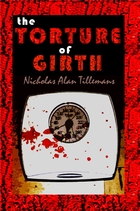
Immediately after college, I started writing a romance novel with a headless female protagonist, “Acetone Enema.” I eventually gave up on it as a novel and turned it into a short story by the same name, which I submitted to an exposure market, The House of Pain. For the next several years, I wrote a dozen short stories in a similar vein—e.g. “Baby Hunter,” “The Mechanics of Perversion,” “The Purloined Lips of Destiny,” etc. Encouraged by the positive feedback I was receiving, I began writing The Torture of Girth, my first novel.

I submitted various short stories to paying markets over the next several years with no takers. Ten years passed. During that time, I married my wife, we bought an old house, and my son was born. I noticed that the publishing landscape was changing dramatically. I tested the waters by independently publishing a collection of short stories and poetry: Acetone Enema: A Morbid Collection of Short Stories & Poetry. I landed positive reviews; and there seemed to be renewed interest in my writing. So, I hazarded a final rewrite of my novel The Torture of Girth; and I have now independently published the novel as well.
Unlike traditional publishers, I have never asked whether I would make money from my books, but rather only whether there was some public interest in them. I can’t help writing what I write. Life events and other creative endeavors have drawn me away from writing for years at a time. But I always come back to it. It’s an integral part of who I am. As such, I find myself inexorably diving into the indie mosh pit. For all of its problems, it looks like it’s here to stay. We should all be sure to stay on our feet and watch for hurdling bodies.
--------
Many thanks to Nicholas for dropping by and talking about his writing!